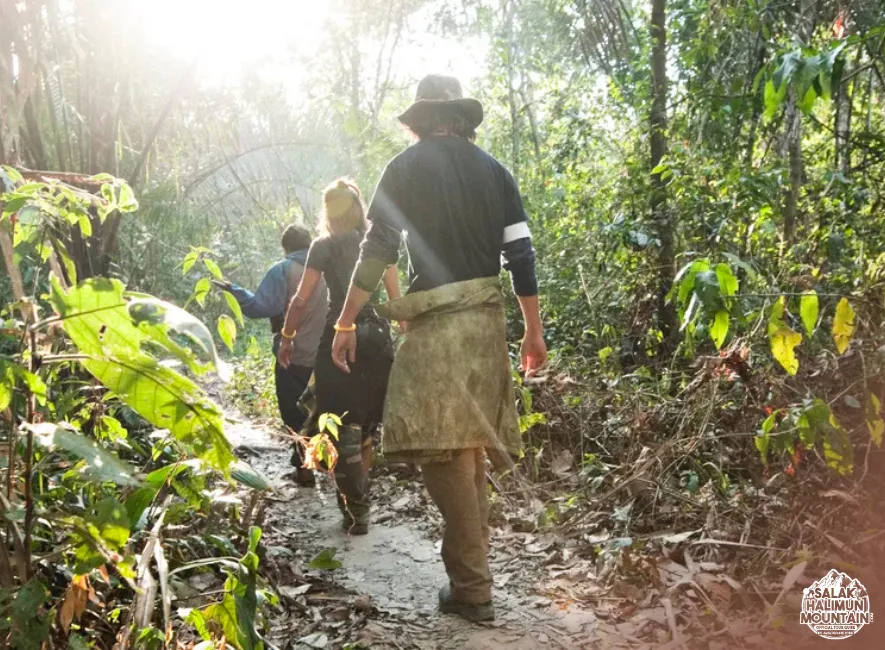
salakhalimun.com – The first step into a rainforest is never just a step. It is a quiet agreement between you and the living world around you. The air thickens, your skin feels the moisture, and the light changes as towering trees weave a green ceiling above your head. In Mount Salak and Mount Halimun, hiking is not simply about reaching a destination. It is about learning how to move through one of Java’s oldest and most complex ecosystems with patience, humility, and respect.
Many hikers arrive with experiences from mountains, deserts, or open trails elsewhere in the world. They expect clear paths, predictable weather, and wide views from high ridges. Rainforest hiking gently rewrites those expectations. In Halimun–Salak National Park, every step is shaped by humidity, biodiversity, and the unseen rhythms of the forest itself.
The Rainforest Breathes Around You
Unlike dry or alpine environments, a rainforest feels alive in a deeply physical way. The air in Salak–Halimun is heavy with moisture, carrying the earthy scent of wet soil, fallen leaves, and tree resin. Breathing here feels different. Each inhale is warmer, fuller, and slower, encouraging your body to match the forest’s calm pace.
This humidity changes how your body moves and responds. Sweat does not evaporate quickly, and energy must be managed carefully. Hiking becomes less about speed and more about rhythm. Experienced rainforest hikers learn to walk steadily, pause often, and listen to what their body needs. The forest rewards those who respect its tempo.
Trails That Shift and Evolve
In many places, hiking trails are permanent and predictable. In a rainforest, trails are living paths. Rain reshapes the ground, fallen trees create new obstacles, and creeping plants slowly reclaim open spaces. On Mount Salak and Mount Halimun, a trail you walk today may feel slightly different next season.
Mud is not an inconvenience here. It is part of the experience. Soft earth cushions your steps, while exposed roots demand careful footing. Moss-covered rocks can be slippery, especially after rain. These natural challenges sharpen your awareness and teach balance in a way that no paved trail ever could.
This is why local knowledge matters. Guides who walk these paths regularly understand how weather, season, and wildlife activity influence trail conditions. They know when a river crossing is safe, when a slope requires extra care, and when the forest suggests turning back.
Soundscapes That Replace Silence
Silence is rare in a rainforest. Instead, Mount Salak and Halimun offer a layered symphony. Cicadas pulse like a living heartbeat. Birds call from hidden branches. Water flows somewhere nearby, even when unseen. Occasionally, leaves rustle with the quiet movement of unseen animals.
This constant sound is not noise. It is information. Over time, hikers learn to recognize patterns. A sudden hush may signal movement. A change in bird calls can indicate a shift in weather. Listening becomes as important as watching, and the forest slowly teaches you how to hear it.
Limited Views and Deeper Discovery
Rainforest hiking rarely offers wide, open panoramas. Dense vegetation often limits long-distance views, replacing them with intimate details. Sunlight filters through leaves in shifting patterns. Tiny orchids cling to tree trunks. Ferns unfurl beside the trail, and insects display colors more vivid than any flower.
This closeness changes how beauty is experienced. Instead of dramatic horizons, the rainforest invites slow observation. Beauty is found in texture, movement, and quiet moments. A single drop of water sliding from a leaf can feel as meaningful as standing on a summit elsewhere.
Constant Companionship of Water
Water defines rainforest hiking. In Salak–Halimun, rivers, streams, waterfalls, and mist are constant companions. Trails often follow waterways, cross shallow streams, or pass hidden cascades echoing through the trees.
This abundance of water brings both wonder and responsibility. Footwear must be chosen carefully. Steps near streams require attention. During heavy rain, water levels can rise quickly. Respecting these conditions is essential, and hikers are encouraged to move thoughtfully and never underestimate the forest’s power.
A Living Classroom of Biodiversity
Hiking in a rainforest means walking through one of the most biodiverse environments on Earth. Halimun–Salak National Park shelters countless plant species, rare mammals, colorful amphibians, and birds found nowhere else.
Unlike open landscapes where wildlife sightings may be rare, rainforest life surrounds you constantly, even when unseen. Insects pollinate silently. Frogs call from hidden pools. Birds glide above the canopy. Every step passes through multiple layers of life, from forest floor to treetops.
This richness encourages humility. You are not the center of the landscape here. You are a temporary guest, moving carefully through an intricate web of life that has existed long before your arrival.
Weather That Changes Without Warning
Rainforests create their own weather. In Mount Salak and Mount Halimun, a sunny morning can turn into a gentle rain by midday. Mist can roll in suddenly, softening the forest into a dreamlike world.
Rain is not a disruption. It is a defining feature. The forest glows when wet. Colors deepen, scents intensify, and the ecosystem comes alive. Hiking in light rain can be one of the most beautiful experiences, as long as it is approached with preparation and respect.
Mental Shifts and Emotional Presence
Perhaps the greatest difference between rainforest hiking and hiking elsewhere is what happens internally. The rainforest encourages presence. With fewer distant views and more immediate surroundings, your attention naturally focuses on the present moment.
Many hikers describe a sense of grounding in Salak–Halimun. The steady rhythm of walking, the enveloping greenery, and the constant natural sounds create space for reflection. Time feels slower. Concerns from outside the forest fade, replaced by a quiet awareness of being exactly where you are.
Ethics and Responsibility Matter More Here
Rainforests are resilient, yet fragile. A single careless action can cause lasting impact. In Halimun–Salak National Park, responsible hiking is not optional. It is essential.
Staying on established trails protects delicate plants. Carrying out all waste preserves water sources. Respecting wildlife means observing without disturbing. Local guides play a key role in ensuring visitors understand these responsibilities and walk with care.
When hikers move responsibly, they help ensure that future generations can experience the same magic. The forest remembers how it is treated.
Rainforest Hiking Is a Relationship
Hiking elsewhere may feel like conquering terrain or reaching a goal. Hiking in a rainforest feels more like a conversation. The forest sets the terms, and you learn to respond.
In Mount Salak and Mount Halimun, every hike becomes a shared journey between human and nature. You adapt to the forest, not the other way around. And in return, the rainforest offers moments of quiet beauty, deep connection, and unforgettable memory.
Closing the Journey
Understanding why hiking in a rainforest is different helps you approach Salak–Halimun with the right mindset. It is not about speed or achievement. It is about awareness, respect, and wonder.
So, if you’re ready to explore the wonders of Mount Salak Halimun, head over to our ONLINE BOOKING PAGE and let’s start planning your adventure. Or simply CLICK THIS LINK to chat with us on WhatsApp.
With our team, you’re not just getting a guide; you’re gaining a local friend who will ensure your trip is nothing short of extraordinary.